
READ MORE >
Pailton Engineering receives PACCAR 10 PPM quality achievement
Achievement in recognition of the company’s quality performance in parts supplied to DAF Trucks N.V.

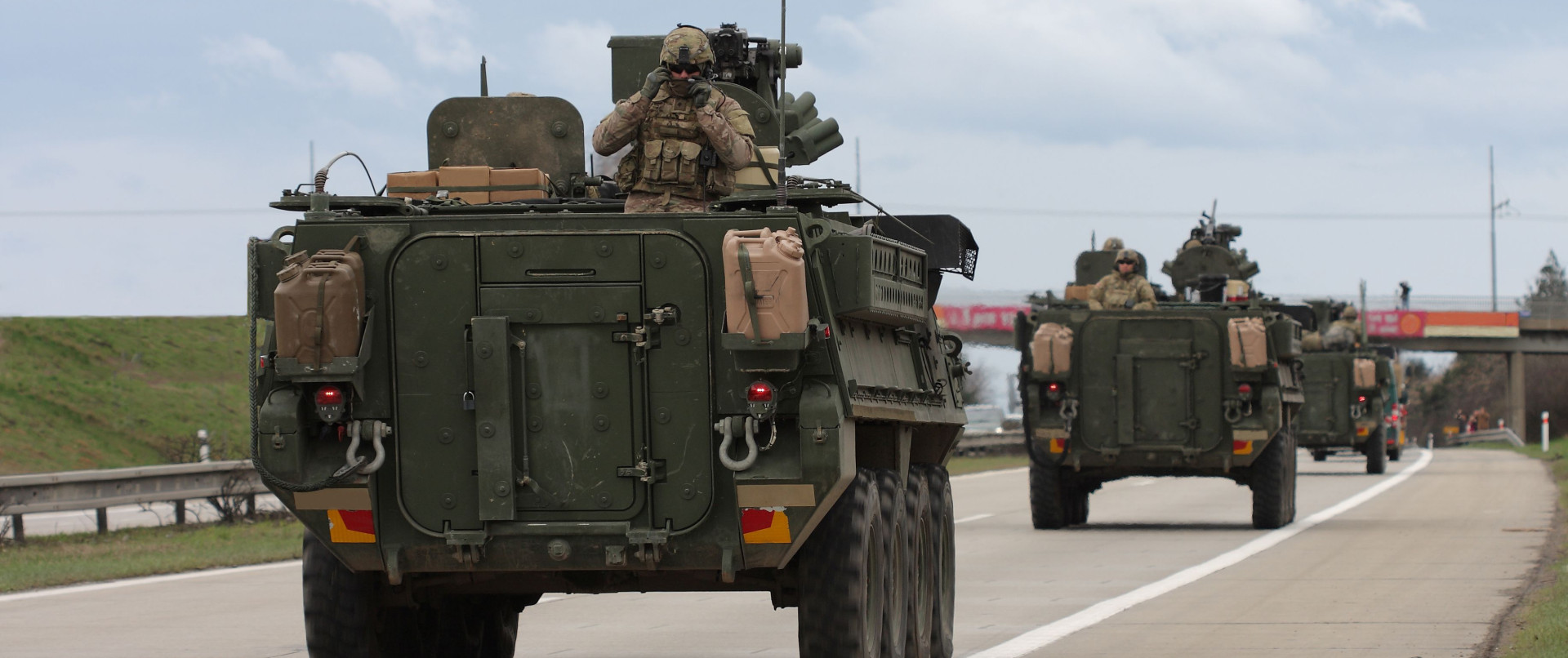
Autonomy on the ground, particularly for convoy and logistics operations, is showing more tangible progress than many other unmanned military concepts. Recent US Army efforts to combine human-led vehicles with autonomous followers differ from earlier experiments by focusing on deployable, budget-aware solutions that align with existing convoy doctrine.
Rather than fully driverless vehicles roaming the battlefield independently, the leader–follower model used in military contexts lets a human-crewed lead vehicle set the pace and route, while one or more followers use autonomy tech to mimic its movements. This kind of strategy is especially appealing for logistics convoys, which send supplies or fuel along routes without putting a full roster of drivers at risk.
While classic “leader–follower” systems have been around in one form or another before, the current focus is not on old experimental projects but on next-generation solutions that mix autonomy, waypoint navigation, and teleoperation.
Just look at how the US Army is structuring its latest programmes. In 2025, the Army and the Defense Innovation Unit down-selected Carnegie Robotics and Forterra to continue prototyping work on the Autonomous Transport Vehicle System (ATV-S), concentrating investment on a small number of mature solutions and moving the programme into formal Army test and evaluation.
Under current plans, the aim is to narrow this to a single solution by FY2026 and scale the technology toward a first operational unit, with soldiers expected to handle prototype vehicles during Project Convergence trials later this year.
By reducing the number of drivers required in convoy operations, the Army is looking to cut soldier exposure in long, contested routes while also addressing driver fatigue during sustained logistics missions.
What’s more, service officials have said that autonomous convoy technology could increase the output of a truck company by around 50 per cent compared with purely manned convoys.
This is a gain that directly affects how quickly and reliably supplies can be moved forward, and that kind of impact matters. Logistics units are the backbone of any deployment, and improving their efficiency allows commanders to reallocate personnel to higher-value mission roles.
Prototyping and progress in 2025
The US Army has gone from talking about autonomous logistics to actively testing it. Phase two testing is expected to focus on how the ATV-S performs in realistic convoy scenarios, including waypoint navigation, remote operation and manned–unmanned teaming.
Soldiers are also due to interact directly with prototype vehicles during Project Convergence trials, giving the Army valuable feedback on how autonomy works in the hands of end users rather than just in controlled test environments.
However, as with many defence programmes, progress is still determined by budget timing. Ongoing funding uncertainty has the potential to stretch schedules, but it hasn’t stopped the Army from refining the concept.
Officials continue to stress that the goal is not fully independent vehicles operating in isolation, but reliable autonomous followers that can move supplies forward while reducing driver workload and exposure.
That broader intent sits alongside other logistics modernisation efforts, from tele-maintenance and advanced manufacturing to uncrewed air and maritime delivery. Together, they point to a future sustainment model where autonomy is layered in where it makes sense, helping units move faster, stay supplied, and operate with fewer people in harm’s way.
Industry momentum mirrors this shift. At the Association of the US Army (AUSA) 2025 expo, Oshkosh Defense displayed its Family of Multi-Mission Autonomous Vehicles (FMAV), a lineup built on existing tactical platforms and designed with integrated autonomy for resupply and formation movement tasks.
Why pragmatism matters
Rather than chasing a vision of fully autonomous vehicles operating alone, the US military’s focus on leader–follower convoys is a more grounded approach to autonomy on the battlefield.
What makes this moment different from earlier experiments is the emphasis on realism. Systems like ATV-S are designed around existing vehicles, familiar convoy tactics, and direct soldier interaction, rather than requiring wholesale changes to doctrine or infrastructure.
That pragmatism is why autonomous convoy technology is edging closer to frontline logistics use, even as budgets and timelines remain fluid. For logistics units operating in contested, distributed environments, incremental but concrete steps toward autonomy may prove more valuable than headline-grabbing breakthroughs.
Achievement in recognition of the company’s quality performance in parts supplied to DAF Trucks N.V.
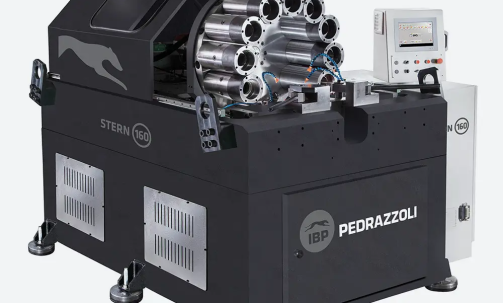
Steering systems manufacturer investment enhances capacity and reliability.

Pailton Engineering modernizes its manufacturing processes with a new collaborative robot (cobot).

