READ MORE >
Pailton Engineering receives PACCAR 10 PPM quality achievement
Achievement in recognition of the company’s quality performance in parts supplied to DAF Trucks N.V.

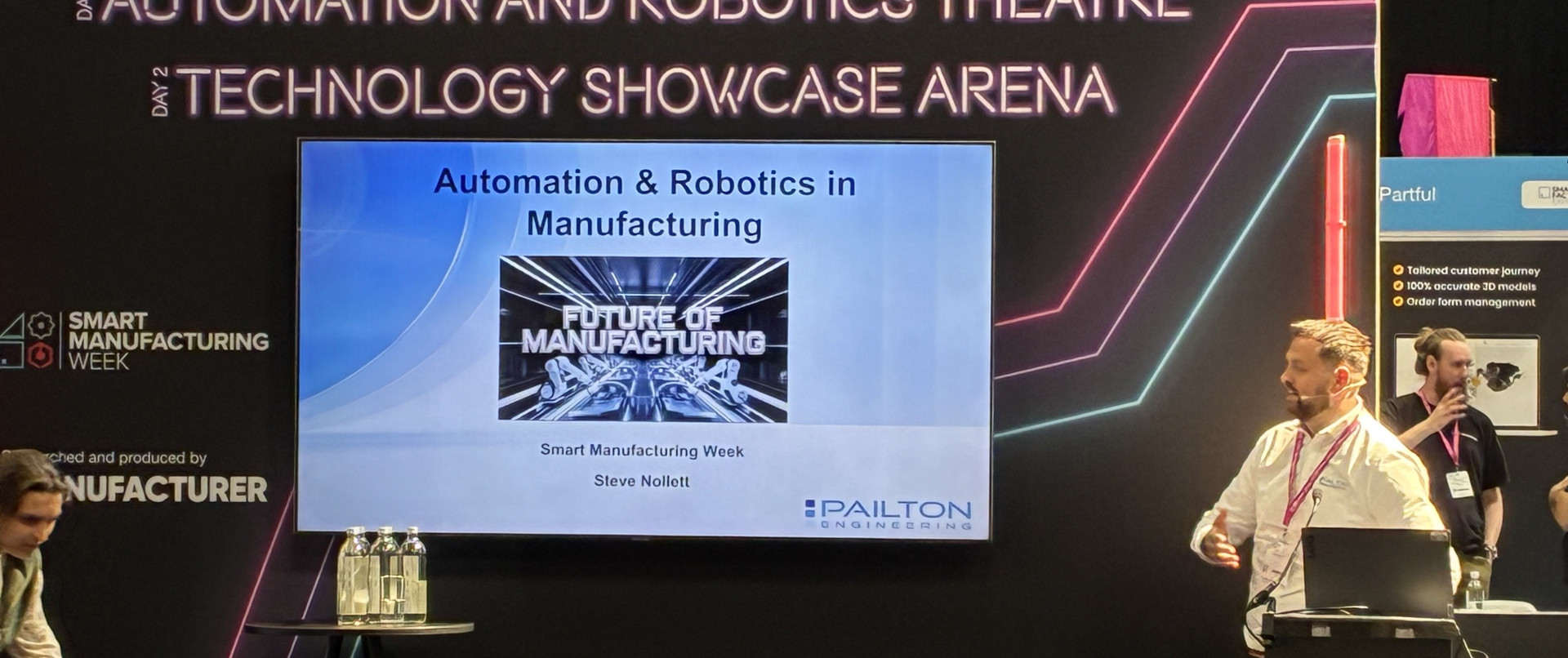
Steve Nollet was asked to give a talk at the Automation and Robotics stage at Smart Manufacturing Week in June 2025. He spoke about the future of automation in manufacturing, focussing on the benefits it can have for the workforce. Here, Steve explains the key points from his talk and why he sees automation making life better for workers.
At its core, automation aims to make better use of human potential. When workers are freed from the grind of constant loading, unloading and monitoring, they’re able to shift their focus to solving problems, refining processes and maximising the capabilities of new technology.
This is a cultural change as much as a technological one, challenging long-held practices and encouraging teams to think creatively about how to work smarter. Automation is about elevating jobs, not replacing them.
Enabling innovation
Pailton Engineering recently invested in a HAAS EC-400 machine with seven pallets that it can manipulate automatically. This freed the operative who previously had to be present every half an hour to unload new parts and reload the machine with stock, greatly improving their capacity to do other work.
The time savings from this machine and others allow our skilled workers and programmers to consistently work on optimising the system. For example, investigating how developing multi-sided fixtures, or tombstones, could improve efficiency by adding more jobs to each pallet.
Instead of focussing their time on loading and unloading machines, staff can use their expertise in the tool shop to work out ways to maximise the benefits of the technology.
Reducing fatigue
In addition, steel forging work can be labour intensive. If an operative is running two machines with a slow cycle time, they could start to get fatigued by the end of a seven-hour shift. If a worker normally produces ten parts an hour, fatigue might reduce that to eight by the end of their shift, potentially creating a backlog.
Fatigue also increases the risk of errors with quality control. Using tools like verniers, micrometres or bore gauges to measure parts requires careful attention and someone could misinterpret results if they are fatigued after spending hours lifting heavy parts.
Cultural development
You often hear people say, “if it ain’t broke, don’t fix it”, but that mindset can lead to workers performing laborious, tiring or potentially dangerous tasks just because they’ve always been done that way.
We’re looking at changing the culture to be more about looking after the workers. Whether it’s constantly running between machines, repeatedly bending down to pick up parts or lifting 20kg every half an hour, if we can automate one of those processes, it will take strain off our workers.
People first
Often, people see automation as a threat — they think that their company is trying to replace them with a machine. The truth is that we want people to stay with us longer, and we can encourage them to do that by reducing the amount of physical labour in their role.
Around the world, the workforce is getting older. According to the Engineering Council, the average age of an engineer in the UK is 54, so it’s especially important to make sure that jobs are not more physically demanding than necessary.
If someone injures their back outside of work or develops a joint problem, that could impact their ability to work if their job is labour intensive. With automation, they don’t need to worry, they can still carry out high-value work without exacerbating an existing issue.
Modernising the workplace also encourages the next generation to consider engineering as a career. For example, young people or women might feel more comfortable applying for a position if heavy lifting is not a major part of the job.
Future trends
The next step is expanding automation to other sections of the business. Further down the line, using collaborative robots (cobots) to automate loading or unloading of manufacturing and inspection machines could increase the amount of time they can run unsupervised. Eventually, there could be an entire third shift running lights-out.
Automation introduces possibilities that extend far beyond simply keeping machines running. By removing the need for constant manual intervention, it creates space to rethink how tasks are structured and prioritised. For skilled workers, this means less time spent on repetitive labour and more time dedicated to refining fixtures, optimising programmes, and finding smarter ways to use advanced equipment.
The shift to automation will enable the workforce to operate at its full potential, not just by increasing productivity, but by making life better for workers.
Achievement in recognition of the company’s quality performance in parts supplied to DAF Trucks N.V.
Steering systems manufacturer investment enhances capacity and reliability.

Autonomy on the ground is showing more tangible progress than many other unmanned military concepts.

